Crohn's disease & ulcerative colitis
Inflammatory bowel disease (IBD)
Autoimmune conditionImmune-mediated conditions in which the immune system drives chronic inflammation of the digestive tract. They're often grouped with autoimmune diseases.
What happens
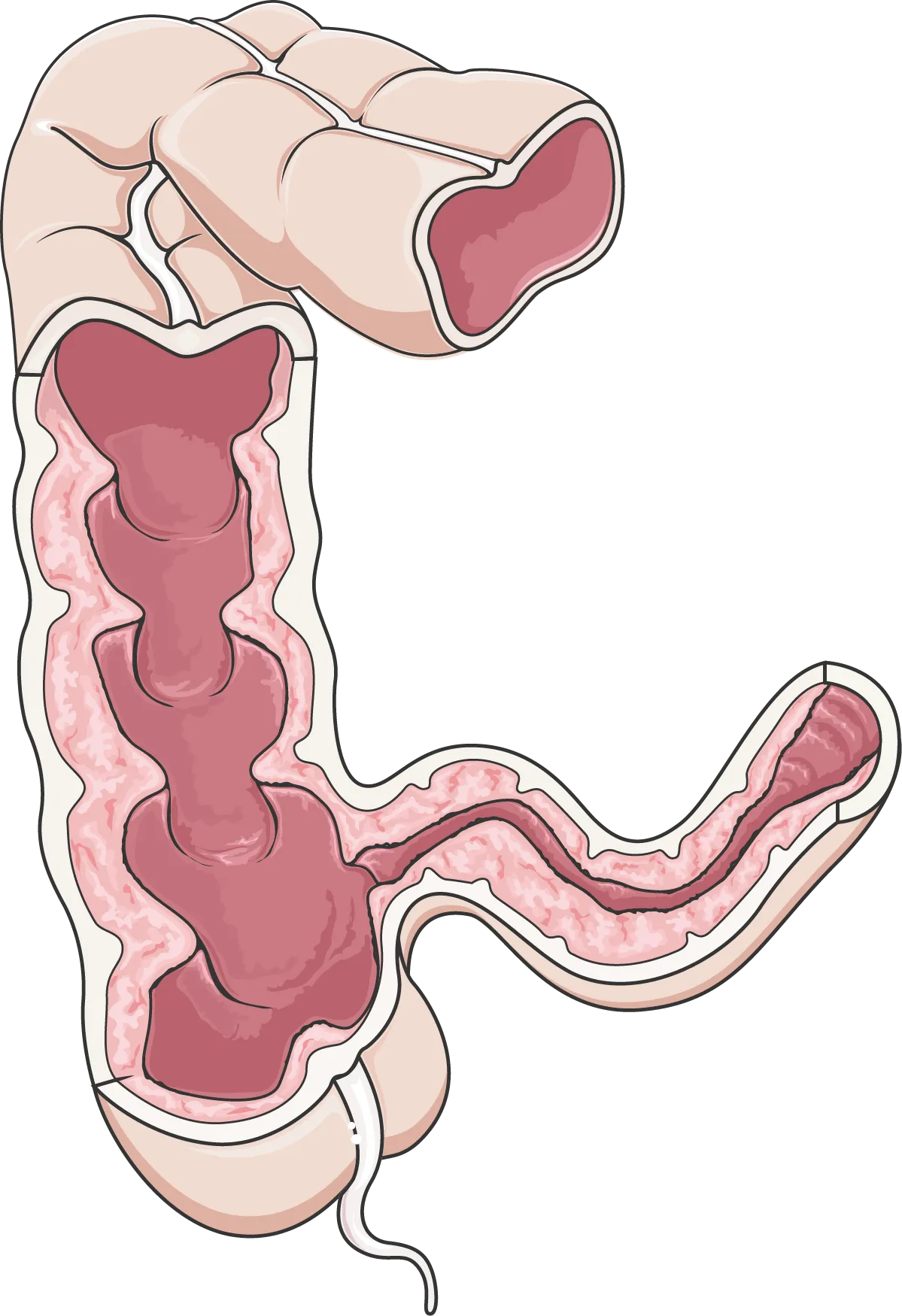
In Crohn's disease, inflammation can affect any part of the digestive tract, often in patches and through the full thickness of the bowel wall. In ulcerative colitis, it's continuous and limited to the lining of the colon and rectum. Both tend to flare and settle, and both can affect the joints, skin, and eyes.
Who gets it
IBD often begins between ages 15 and 35 and affects women and men about equally. A family history raises the risk, and smoking raises the risk of Crohn's.
Common signs
- Diarrhea that lasts weeks, often with urgency
- Blood or mucus in the stool
- Abdominal pain and cramping
- Weight loss
- Fatigue
- Fever during flares
- Mouth ulcers
- Joint pain, red eyes, or tender red bumps on the shins
Labs to ask about
- Fecal calprotectin (helps tell IBD apart from IBS)
- Complete blood count, ferritin, and CRP
- Stool tests to rule out infection
- Colonoscopy with biopsy to diagnose
How it's usually treated
- Anti-inflammatory and immune-modulating medicines, including biologics
- Nutrition support
- Surgery for some complications
Supportive steps to discuss with your provider
- Keep a symptom diary to track flares and triggers.
- Check iron, B12, and vitamin D, which often run low.
- Keep taking prescribed medicine when you feel well. Staying in remission depends on it.
- Stop smoking, especially with Crohn's.
See a doctor promptly if you have
- Heavy rectal bleeding or black stools
- Severe abdominal pain or a swollen, tender belly
- Fever with bloody diarrhea
- Signs of dehydration, such as dizziness or very little urine
Related conditions
Celiac disease
An autoimmune reaction to gluten (in wheat, barley, and rye) that damages the lining of the small intestine and blocks nutrient absorption.
Learn more →Psoriasis & psoriatic arthritis
An immune-mediated condition in which skin cells build up too quickly, forming thick, scaly patches. Up to about 1 in 3 people with psoriasis develop psoriatic arthritis.
Learn more →Autoimmune liver disease
Two autoimmune liver diseases that mostly affect women: autoimmune hepatitis attacks liver cells, and primary biliary cholangitis attacks the small bile ducts.
Learn more →
Wondering if your symptoms fit a pattern?
Dr. Lesher is a naturopathic doctor who specializes in women's autoimmune and chronic conditions. Since 2020, she has helped more than 900 patients overcome and heal from their conditions.